In April 1964, Andy Warhol took police identification photographs and turned them into one of the most provocative public-art gestures of the New York World’s Fair. The work, Thirteen Most Wanted Men, was installed on the exterior of the New York State Pavilion—and then covered with silver paint before the fair opened to the public.
A police booklet becomes public art
Warhol’s source material came from a New York Police Department booklet featuring thirteen men on the department’s 1962 most-wanted list. The Andy Warhol Museum and Queens Museum describe the original mural as a monumental grid made from enlarged police photographs, including frontal and profile views.
The project was Warhol’s first major public-art commission. Architect Philip Johnson had invited artists to create works for the New York State Pavilion. Instead of choosing a celebratory image of New York, Warhol placed criminal-identification photography on the side of a government-sponsored building at a world’s fair.
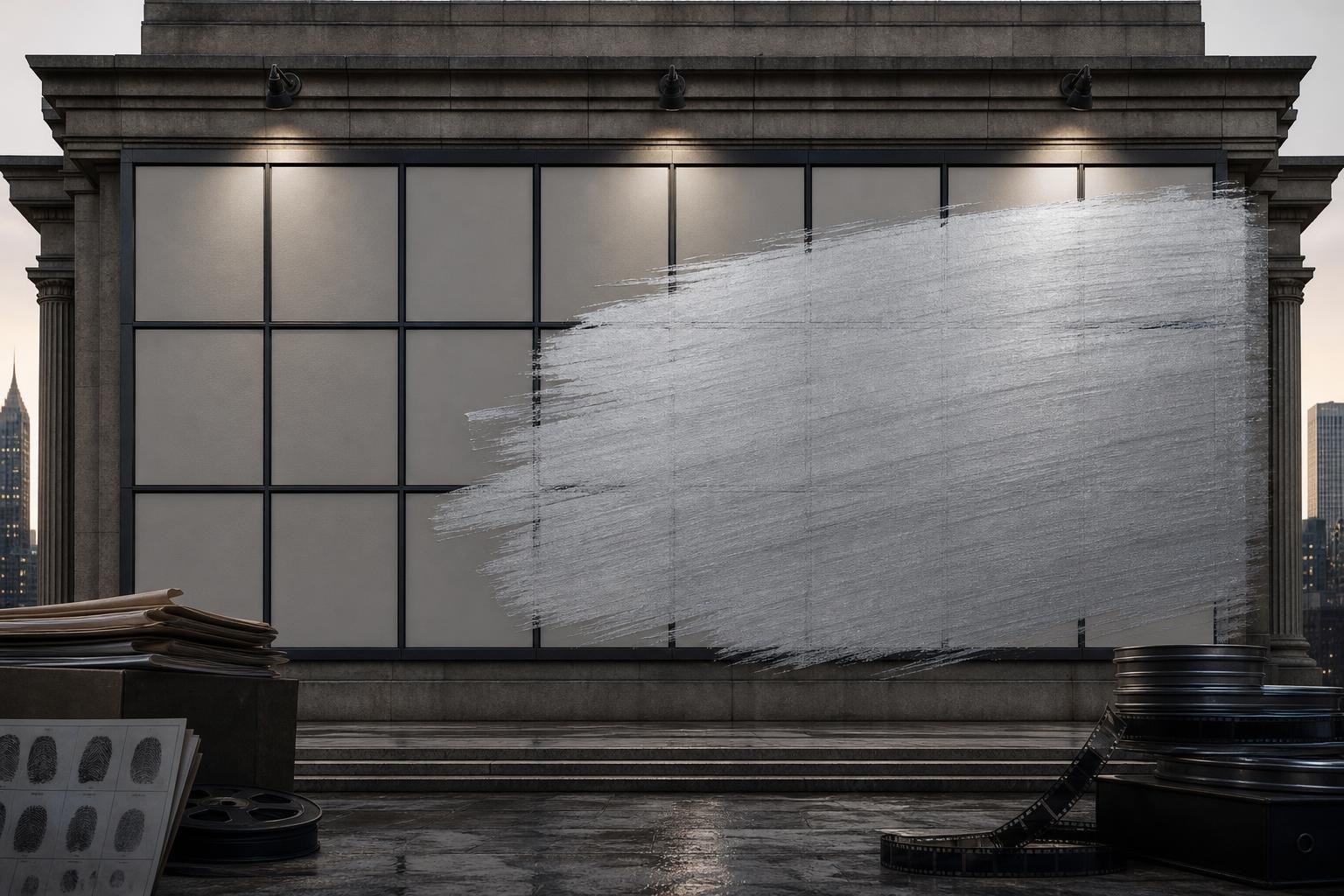
The mural was installed on April 15, 1964. Within days, fair officials directed that it be covered with silver paint. By the time visitors arrived, the original faces had disappeared behind a large silver field.
Why the mural was so disruptive
The power of the work came from more than scandal. Mugshots are made to identify and categorize people within a law-enforcement system. Warhol enlarged that visual language and moved it into the realm of spectacle, where scale and repetition were already central to his images of movie stars, consumer goods and newspaper photographs.
The Whitney Museum has described the mural as an extension of Warhol’s interest in the antihero. The work complicated the distinction between celebrity and notoriety: a face could become culturally “famous” because it had been reproduced often enough, regardless of why the photograph existed in the first place.
The image survived the censorship
Painting over the mural did not end the project. Warhol kept using the same screens and later produced a related series of Most Wanted Men paintings on canvas. The Andy Warhol Museum notes that these later works were publicly exhibited in Paris in 1967.
That afterlife matters. The original public mural was physically erased, but the visual concept became part of Warhol’s larger body of work—and part of the history of Pop Art’s use of institutional and mass-media imagery.
From Warhol to Hollywood Most Wanted
The same question continues to animate contemporary mugshot art: when does an identification photograph stop functioning only as a police record and become a cultural image?
Rachel Schmeidler’s Hollywood Most Wanted project works in that territory. Celebrity booking photographs arrive already saturated with public recognition. Reworking them through silkscreen, mixed media and color creates a second image layered over the first: the institutional photograph remains visible, but so do the machinery of fame, judgment, repetition and public memory.
Warhol did not invent the mugshot. What he demonstrated was that the visual grammar of the mugshot could be moved into art without losing the tension of its original purpose. That tension—between record and portrait, accusation and identity, private vulnerability and public spectacle—still shapes how celebrity arrest images are read today.
See also: Hollywood celebrity mugshots: the history of public records and their use in Pop Art.