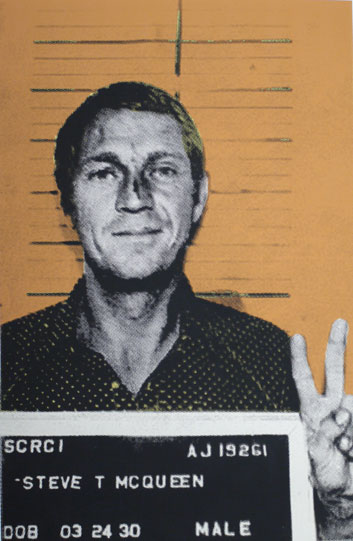
Hollywood celebrity mugshots sit at the intersection of government transparency, personal reputation and commercial culture. If you plan to publish, license or transform one, you need to confirm both its public-record status and the separate rights governing reuse.
A mugshot is an identification photograph created during booking. It records an arrest—not guilt, a criminal charge or a conviction. Anyone shown must be described accurately and, when a case remains unresolved, treated as presumed innocent unless proven guilty.
As newspapers expanded crime coverage, booking photographs became familiar visual shorthand. Hollywood fame intensified their circulation: an ordinary administrative image could become entertainment news, a collectible or source material for art.
Pop art exposed that transformation. Andy Warhol’s 1964 Thirteen Most Wanted Men used images derived from a New York Police Department booklet for a New York World’s Fair installation. By enlarging and repeating police imagery, the work examined celebrity, surveillance and mass reproduction rather than documenting convictions.
“Public record” does not mean unrestricted creative property. Access rules vary among federal, state and local agencies, while exemptions may protect privacy, investigations or vulnerable people. A photograph may also raise copyright, publicity, trademark, defamation and false-light concerns depending on its origin, context and jurisdiction.
Sources & References