From the archive. Nick Nolte’s 2002 booking photograph became one of the most widely circulated celebrity arrest images of its era. But the photograph’s cultural afterlife can easily overshadow the actual case behind it.
What happened in Malibu
California Highway Patrol officers arrested Nolte near Malibu on September 11, 2002, after observing his Mercedes driving erratically on Pacific Coast Highway. Contemporary reporting from the Los Angeles Times said officers saw the car swerving, cutting off other vehicles and crossing into an oncoming lane before stopping him.
Nolte was booked at the Los Angeles County Sheriff’s Department’s Lost Hills-Malibu station and released later that day. The arrest was initially described as suspicion of driving under the influence; subsequent testing and court proceedings focused on drug impairment.
The case outcome
In December 2002, Nolte pleaded no contest to driving under the influence of drugs. According to UPI and the Los Angeles Times, he received three years of probation, counseling and drug-testing requirements, and was ordered to continue rehabilitation. A second misdemeanor count was dropped as part of the plea agreement.
In 2006, a judge found that Nolte had successfully completed the probation imposed in the case.
How one photograph became the story
The legal case was relatively straightforward. The photograph was not. Nolte’s booking image quickly detached from the procedural facts of the arrest and circulated as a piece of celebrity culture in its own right.
That transformation is central to the Hollywood Most Wanted archive. A booking photograph is created for identification, not portraiture. Yet once a famous person is involved, the same image can be reproduced in newspapers, entertainment coverage, search results and later retrospectives until it becomes shorthand for the person rather than for one specific event.
That shorthand can distort public memory. An arrest photograph records a moment in a legal process; it does not summarize an entire career, establish guilt by itself or explain what happened after the booking.
From public image to artwork
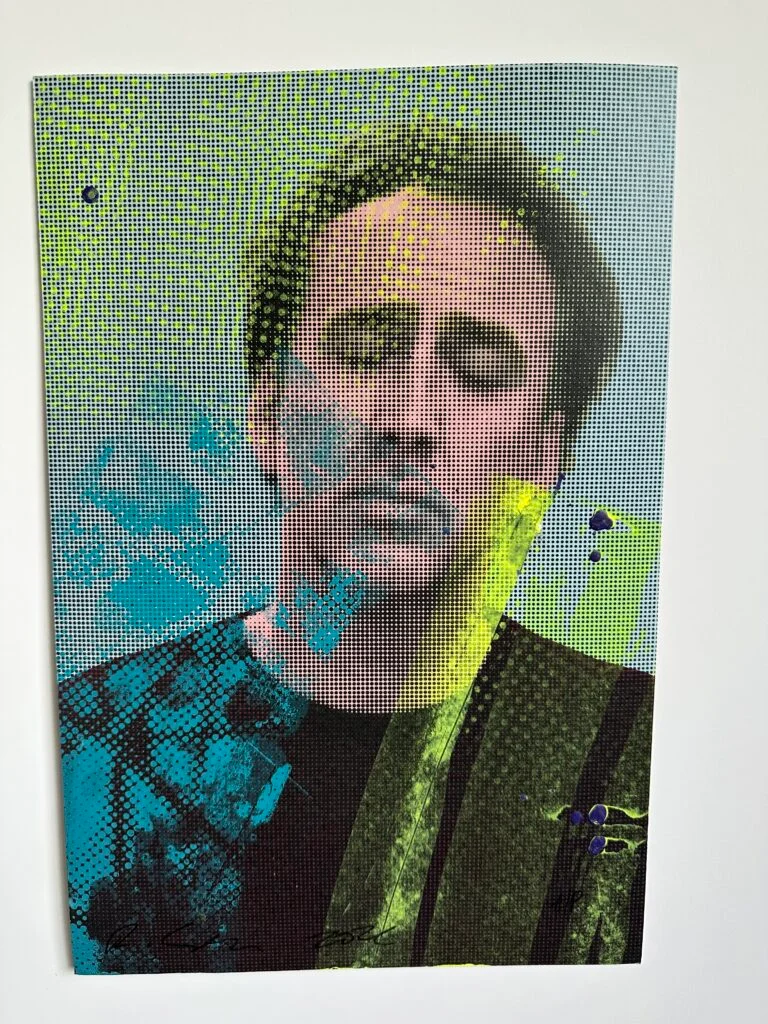
Rachel Schmeidler’s mixed-media silkscreen based on Nolte’s portrait revisits that tension between official identification and celebrity identity. The work belongs to a broader practice of taking images that were originally made by institutions and asking what happens when they are enlarged, recolored, repeated and returned to public view as art.
The result is less about re-reporting an arrest than about examining what a mugshot becomes after the legal case ends: a symbol of vulnerability, notoriety, judgment and the public’s appetite for images of famous people at their least controlled.
For more on that visual history, see Hollywood celebrity mugshots: the history of public records and their use in pop art.