
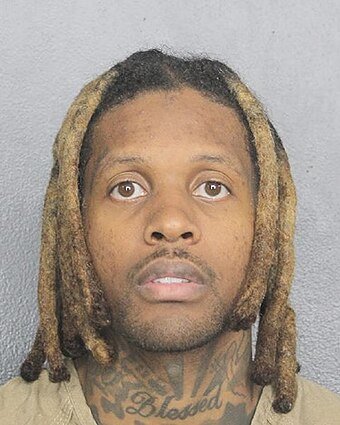
Grammy-winning rapper Durk Banks, known professionally as Lil Durk, was acquitted September 11 by a federal jury in Los Angeles of all charges in a murder-for-hire prosecution tied to the 2022 killing of Saviay’a Robinson near the Beverly Center. The verdict followed three days of deliberations and is a definitive legal outcome in this case: Banks was found not guilty, not merely released or left with a hung jury.
According to the Associated Press, the jury acquitted Banks of charges that included conspiracy, stalking resulting in death and murder for hire. The case centered on prosecutors’ allegation that Banks helped organize a plan targeting rapper Tyquian “Quando Rondo” Bowman after the 2020 killing of rapper King Von, a close Banks associate. Robinson, Bowman’s cousin, was killed in the Los Angeles shooting instead.
Those were allegations the government had to prove beyond a reasonable doubt. The jury’s acquittal means the prosecution did not obtain a conviction against Banks on any of the counts tried in this matter. It does not itself make factual findings about every event described at trial, nor does it amount to a judicial declaration about the conduct of other people involved in the broader investigation.
Two co-defendants tried alongside Banks, Deandre Dontrell Wilson and David Brian Lindsey, were acquitted of the murder-for-hire counts but convicted on stalking-related charges, according to AP and the Los Angeles Times. Their different outcomes underscore a basic but often blurred point in celebrity-case coverage: a multi-defendant verdict can produce distinct legal results for each person and each count. Banks’ result was a full acquittal on the charges submitted against him; the co-defendants’ cases produced mixed verdicts.
The trial was an unusually visible collision of federal criminal litigation and contemporary rap culture. The Los Angeles Times reported that supporters, online creators and high-profile music figures gathered around the downtown courthouse during the proceedings. That attention reflects Banks’ place in drill music’s mainstream expansion: his collaborations and commercial success have made his career a subject not only for rap audiences but for broader entertainment media.
But courtroom visibility can flatten the distinction between an accusation and a finding. The Justice Department’s 2024 announcement described the government’s allegations when Banks was charged, expressly noting that an indictment contains allegations and that defendants are presumed innocent unless proven guilty. The September 11 jury verdict is the later and legally controlling development in this prosecution: Banks was acquitted.
AP reported that Banks nevertheless remains in federal custody because he faces a separate federal prosecution, described as involving racketeering, murder-related and firearms allegations, with a trial then scheduled for October 5. Those allegations have not been resolved and should not be conflated with the case that ended in acquittal. A new trial date or later case result would be a separate development requiring its own reporting.
For public-image purposes, the verdict creates an immediate tension familiar to high-profile criminal cases: the public record of the accusation will remain widely searchable, while the legal record now requires that this particular prosecution be described accurately as an acquittal. Coverage that continues to frame Banks as having been convicted, or that treats the original allegations as established fact, would be materially misleading.