
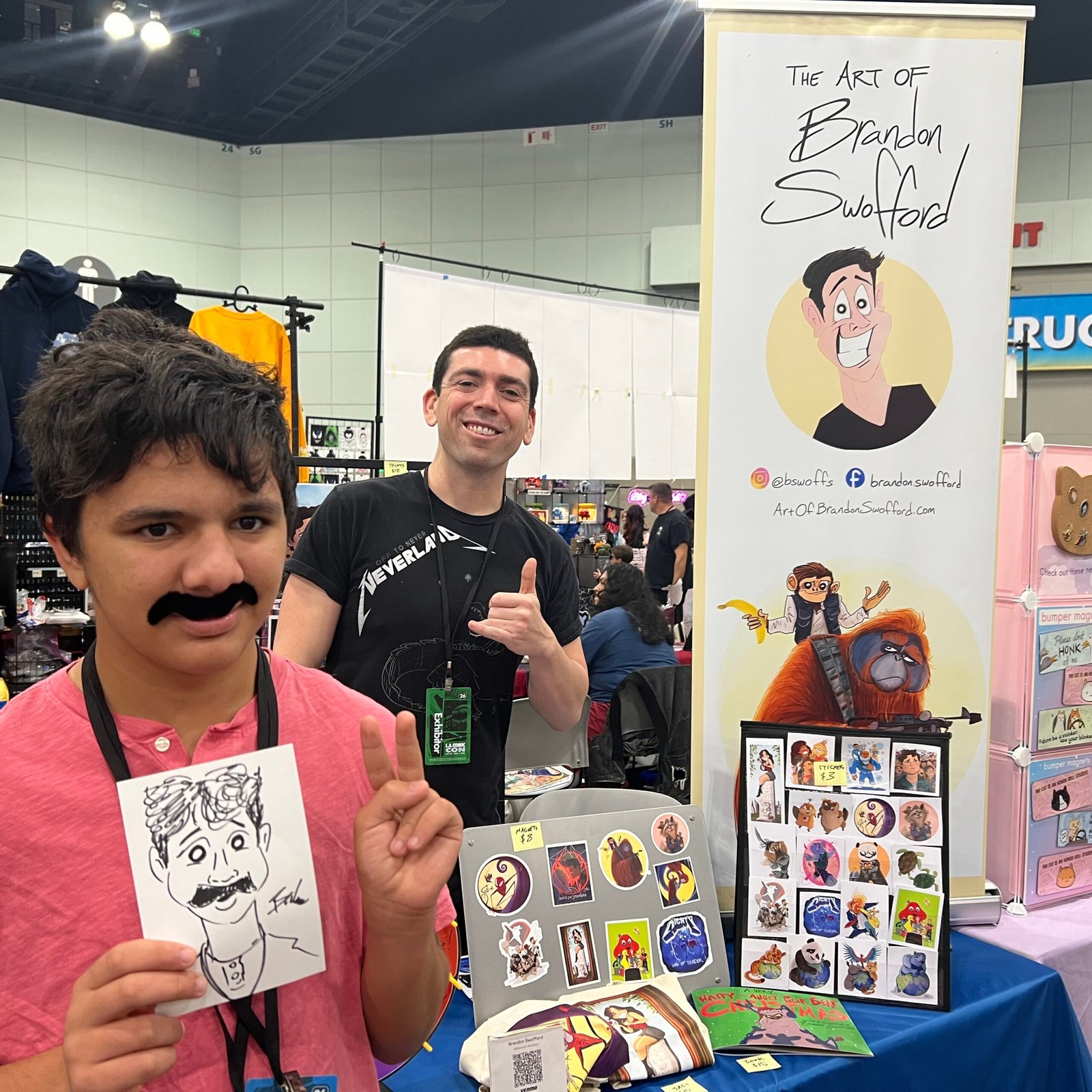
LOS ANGELES — At a comic convention, the audience helps make the show. Costumes become conversation starters. A print leads to a discussion with its artist. Someone’s favorite fictional world becomes something they can walk through, wear or take home.
That participatory spirit gave L.A. Comic Con’s October 30–November 1 Halloween weekend an appeal beyond its celebrity lineup. Nicolas Cage, Hayden Christensen and Breaking Bad cast members supplied recognizable names. Artist Alley and cosplay supplied something more personal: opportunities for fans to put their own creativity on display.
The distinction helps explain what makes a convention worth remembering after the autograph schedule ends. A visitor can arrive as an admirer and leave with a new artist to follow, an idea for a costume or a connection to someone who shares an unusually specific interest.
Cosplay made the crowd part of the attraction
Halloween was a natural setting for a gathering where dressing up is already part of the culture. The official program included Saturday indoor trick-or-treating, alongside cosplay, celebrity programming and gaming.
In the Daily Bruin’s reporting from the event, returning attendee June Lias described the appreciation participants show for the effort behind costumes. First-time L.A. Comic Con attendee Kewin Amir spoke about using cosplay to connect with people who share his interests.
Those accounts point to a pleasure that is difficult to reproduce on a screen. A costume can be admired as an image online; in person, its wearer can explain how it was assembled, adjust a prop or recognize another fan’s interpretation of the same world.
The craftsmanship gives strangers a reason to talk. For a few minutes, the person who made something and the person who recognizes it have common ground.
Artist Alley offered stories behind the images
The same exchange happens across an artist’s table. In the Daily Bruin’s account, comic artist Don Ho said meeting readers helps bring him back to the convention. Author Henry Barajas discussed work rooted in Mexican American history, including Death to Pachuco and the Los Angeles Zoot Suit Riots.
These examples widen the idea of what a comic convention contains. Alongside familiar characters and collectibles are creators using illustration and sequential storytelling to explore history, identity and lived experience.
A table becomes a place to discover the thinking behind a piece of work. For the buyer, knowing who made it can change the meaning of a print or book. For the creator, a conversation can introduce a body of work that a passing glance would miss.
Hollywood Most Wanted’s coverage of Livio Ramondelli’s creator-owned stories and Fanbase Press follows that relationship between the work on a table and the ideas behind it.
Anime and gaming gave fans ways to participate
The convention’s Akiba Station brought anime and Japanese pop culture into West Hall, with advertised attractions including voice actors, cosplay meetups, interactive installations, a stamp scavenger hunt and the Mugen Arcade.
That format gives visitors more to do than watch a stage or wait in a line. A meetup offers a shared destination. A game creates an activity to try together. A scavenger hunt supplies a reason to explore somewhere a visitor might otherwise pass by.
These are different kinds of engagement, but they serve the same purpose: giving people a role in the experience rather than asking them to remain spectators.
A celebration with a real-world cost
The weekend’s enthusiasm did not erase its practical difficulties. Public accounts of $60–$80 parking charges raised a separate question about the expense of getting to the show, especially for people bringing inventory or equipment.
Cost and creativity belong in the same assessment. An event can make room for extraordinary work while still needing better arrangements for the people who produce and support it.
The strongest case for L.A. Comic Con comes from the exchange it enables: fans meeting artists, costume makers finding one another, and a familiar interest opening onto something unexpected. The guest list can bring people through the doors. What they discover about one another gives them a reason to return.