
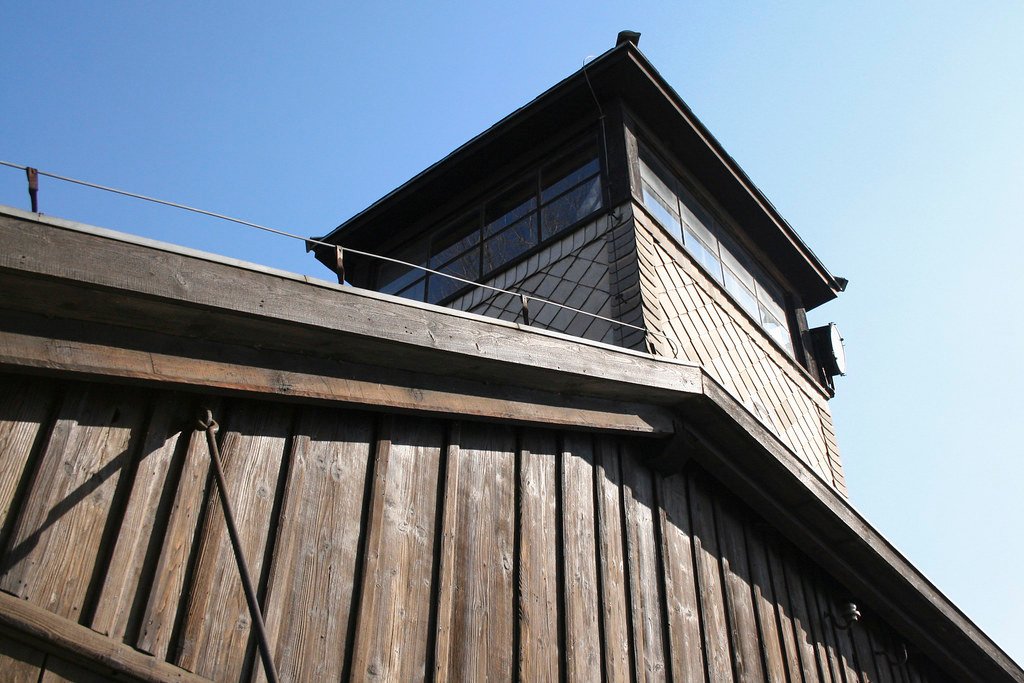
The daughters of Dina Gottliebova Babbitt, a Holocaust survivor and California-based animator, have filed a federal lawsuit in Los Angeles seeking the return of seven watercolor portraits their mother was forced to paint while imprisoned at Auschwitz.
Michele Babbitt Kane and Karin Wendy Babbitt filed their complaint September 14 in the U.S. District Court for the Central District of California against the Auschwitz-Birkenau Memorial and Museum in Poland. The federal docket identifies the case as Kane et al. v. Panstwowe Muzeum Auschwitz-Birkenau w Oswiecimiu and shows that the plaintiffs sought summonses the day the complaint was filed.
According to reporting by the Los Angeles Times and The Associated Press, Gottliebova Babbitt painted the portraits of Roma prisoners under orders from Nazi physician Josef Mengele. Her daughters contend that the works belong to their mother’s estate and seek their return, along with a declaration of ownership and damages.
The museum disputes the family’s position. Pawel Sawicki, a spokesperson for the Auschwitz Memorial, told the AP that the watercolors should remain at the memorial as documentation of Mengele’s crimes. The dispute places the works at the intersection of restitution law, survivor memory and the public mission of a site dedicated to preserving evidence of Nazi atrocities.
The filing comes after recent state and federal measures aimed at strengthening certain Holocaust-era art recovery claims. The Los Angeles Times reported that the Babbitt case and a separate California action involving a painting at the Norton Simon Museum were among the first cases brought under the changed legal landscape.
Babbitt later built a life in California and worked in animation, giving the case a direct connection to the region’s screen-art history. But the suit concerns a narrow legal question that remains unresolved: whether the family can establish a present right to possession of paintings created under coercion in a concentration camp and held for decades by the Auschwitz museum.
The complaint states allegations by the plaintiffs, not findings of fact. The museum had not filed a response shown on the publicly available docket information reviewed for this report.