
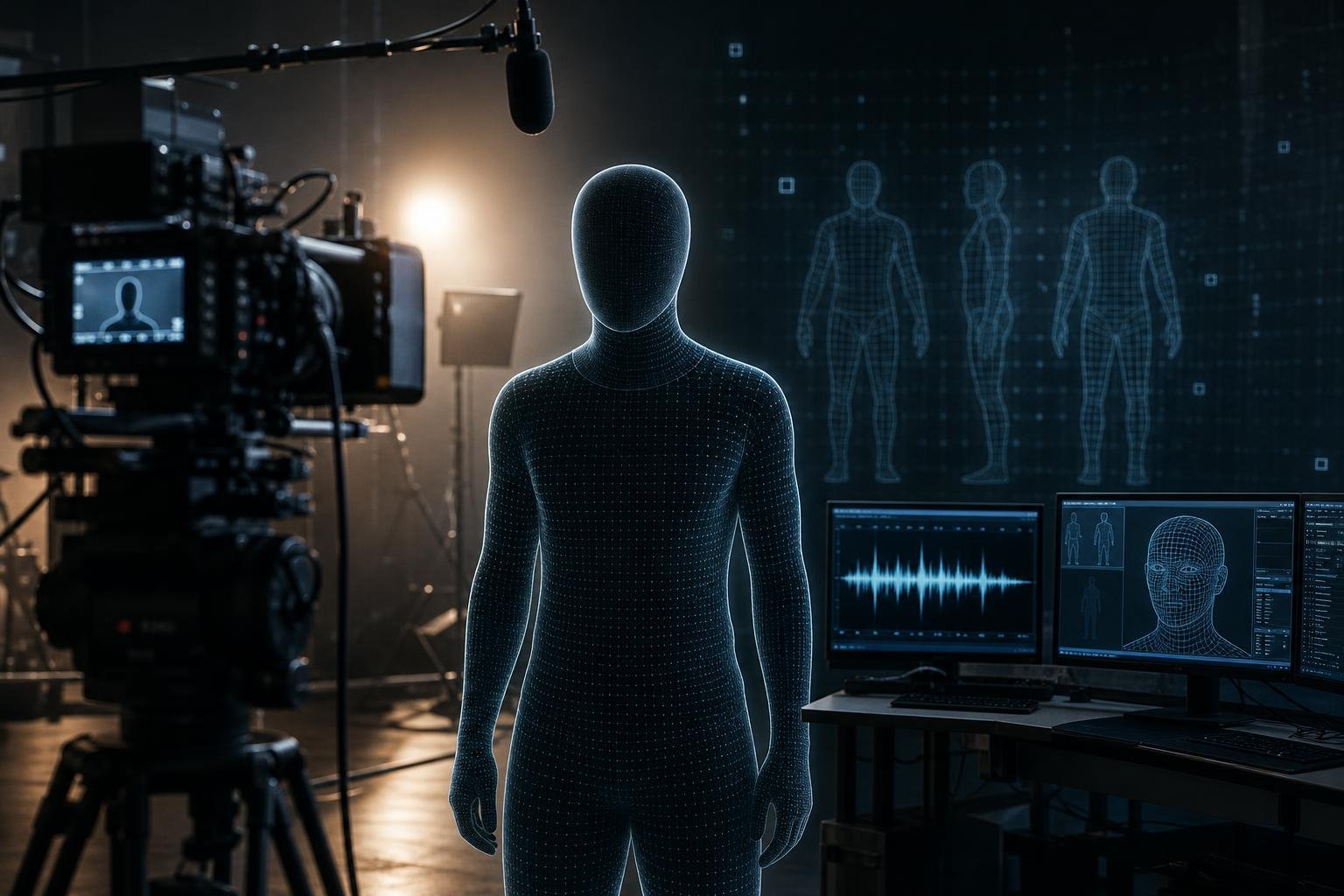
AI-generated performers can reduce production friction, but they also create difficult questions about consent, compensation, copyright and audience trust. If you commission synthetic voices, digital replicas or fully virtual characters, you need a rights-first process that protects both the production and the people whose identities may be reproduced.
WHAT HAPPENED
Generative AI now allows studios and vendors to modify performances, reproduce recognizable voices and faces, and create characters without a conventional on-camera actor. These uses are changing casting, post-production, localization and advertising. The central business problem is not simply whether the technology works; it is whether you have clear authority to create, edit and reuse the resulting performance.
Industry agreements and public policy are evolving in response. SAG-AFTRA’s materials on its television and theatrical contracts describe protections involving informed consent and compensation for certain digital-replica uses. The U.S. Copyright Office has also examined digital replicas, while California legislation addresses some contractual uses of a person’s digital likeness.
WHAT WE KNOW
You should separate 3 common production options:
- Performance enhancement: AI adjusts an actor’s recorded work, such as appearance or dialogue.
- Digital replica: a performer’s identifiable face, body or voice is reproduced.
- Synthetic character: a new performer is generated without intentionally copying a real person.
The third option can still carry risk if training material, design choices or marketing create an unauthorized resemblance. Copyright, publicity rights, labor obligations and contract rules may differ by location and project. You should obtain current advice from qualified counsel rather than assume a vendor’s software license resolves every issue.
A PRACTICAL PRODUCTION CHECKLIST
- Define the intended use, media, territory, duration and permitted modifications.
- Identify every real person whose voice, likeness or performance contributed to the output.
- Document informed consent separately from broad employment or release language.
- Set compensation and approval terms for reuse, sequels, promotion and model training.
- Require vendors to disclose source material, retention practices and subcontractors.
- Keep human review over outputs, credits and audience-facing disclosures.
RISKS AND RECOVERY
Avoid vague “all future technology” clauses, undocumented verbal approval and assumptions that minor digital changes require no review. If authorization is uncertain, pause distribution, preserve production records and investigate the model’s inputs. You may need to remove the material, renegotiate permission or replace the performance. Do not conceal a disputed synthetic portrayal while review is underway.
Sources & References
WHAT’S NEXT
Use AI-generated performers only when identity rights, creative control and commercial terms are documented. Your next step is to audit every synthetic-performance workflow before casting, production or distribution begins.